
Subject Matter Experts play a critical role in exam quality and program credibility. They bring the expertise that ensures content is accurate, relevant, and defensible.
As programs grow, however, the way SME work is managed can become increasingly challenging and sometimes create risk.
Program leaders are often balancing distributed SMEs, increasing content demands, and fixed internal resources. When expectations aren’t clear or workflows lack structure, even highly engaged SMEs can fall behind, making timelines harder to predict and quality harder to manage.
Modern item banking must support more than item creation. It must also provide practical ways to guide, coordinate, and support SME work without adding administrative overhead.
Why Traditional SME Management Breaks Down at Scale
Many certification and assessment programs rely on email, shared documents, and spreadsheets to coordinate SME work. While workable at a smaller scale, these approaches struggle as programs expand and refresh cycles accelerate.
Common challenges include:
- Limited visibility into progress and ownership
- Inconsistent expectations across contributors
- Manual follow-ups that consume staff time
- Delayed awareness when work stalls
- Risk of content exposure
The issue isn’t SME commitment, it’s that traditional coordination methods weren’t designed for ongoing, distributed content development.
A modern item banking platform must provide structure and visibility directly into the SME experience, so work moves forward predictably as programs scale.
What to Look for in a Modern SME Workflow
As content demands grow, testing program leaders need more than goodwill and reminders to keep SME work moving. The right item banking platform provides built-in structure that supports collaboration without creating friction.
At a minimum, modern SME workflows should:
- Give SMEs clear, focused access to the work they’re responsible for
- Make expectations and deadlines easy to understand
- Allow program managers to track progress without constant follow-up
- Reduce reliance on external tools and manual tracking
When these elements are fundamental aspects of the platform, SME participation is predictable and program oversight efficient.
Role-Based Dashboards: Giving SMEs Clarity from Day One
One of the most effective ways to support SMEs is by giving them a clear starting point.
Role-based dashboards allow SMEs to log in and immediately see what matters to them—assigned work, key instructions, and relevant context—without navigating through unrelated areas of the system. Instead of searching for tasks or relying on email reminders, SMEs have a centralized view of their responsibilities.
For program leaders, this approach helps reduce onboarding time for new SMEs, minimizes confusion about priorities, and creates a more consistent experience across committees and contributors
Dashboards provide structure without rigidity, helping SMEs stay focused while keeping programs on track.
Assignments: Turning SME Work into a Structured, Repeatable Process
Clear visibility is only part of the equation. Programs also need a reliable way to assign, manage, and complete SME work.
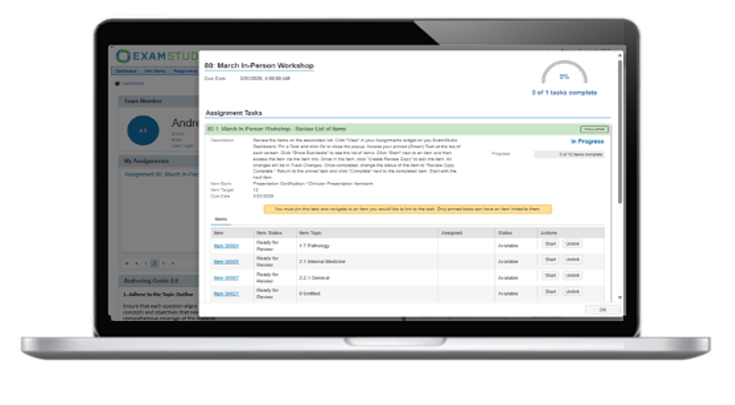
Assignments transform informal requests into defined units of work. Whether the task is reviewing existing items, creating new content, or contributing to a refresh cycle, assignments establish clear ownership and expectations from the start.
By organizing work into assignments and assignment tasks, programs can:
- Distribute work across individuals or groups in an even or targeted manner
- Support different types of SME activities
- Track progress at both the task and program level
- Redistribute allocations when SMEs are unavailable.
The result is a repeatable process that scales as programs grow without adding administrative complexity.
Visibility Without Micromanagement
One of the biggest challenges for certification and assessment program managers is knowing when to step in and when to stay out of the way.
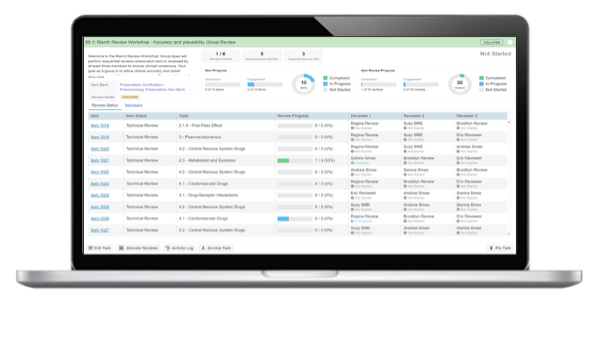
Built-in progress tracking provides real-time insight into how work is moving, without requiring constant check-ins or status meetings. As tasks are completed, progress updates automatically, giving leaders a clear view of what’s on track and where attention may be needed.
This visibility enables:
- Earlier intervention when timelines are at risk
- Fewer last-minute surprises
- More confident reporting to internal stakeholders
Most importantly, it allows SMEs to work independently while keeping programs aligned.
Reducing Administrative Burden While Improving Accountability
When SME coordination lives outside the platform, administrative effort grows quickly. Tracking spreadsheets, chasing updates, and reconciling multiple versions of work all pull time away from higher-value program leadership.
By centralizing dashboards and assignments within the item banking system, programs can replace these manual processes with built-in structure. Work is documented as it happens, progress is visible in real time, and accountability is clear without being heavy-handed.
This balance—structure without bureaucracy—is what allows programs to scale sustainably.
The Takeaway: Better SME Experiences Lead to Stronger Programs
Strong exam programs depend on more than good content tools. They depend on clear workflows, engaged contributors, and predictable execution.
When SMEs have focused dashboards and clearly defined assignments, they can contribute more effectively. When program leaders have visibility without micromanagement, they can guide programs with confidence.
Modern item banking brings these elements together, supporting the people behind the content as intentionally as the content itself.
Supporting SME Collaboration with ExamStudio
At ExamStudio, item banking is designed to support real-world certification programs and the people who run them.
Role-based dashboards and assignment workflows help teams coordinate SME work with clarity, consistency, and minimal overhead.
SME Workflow
1. Shared login screen for all users at online.examstudio.com
2. Role-specific, highly customizable User Dashboard
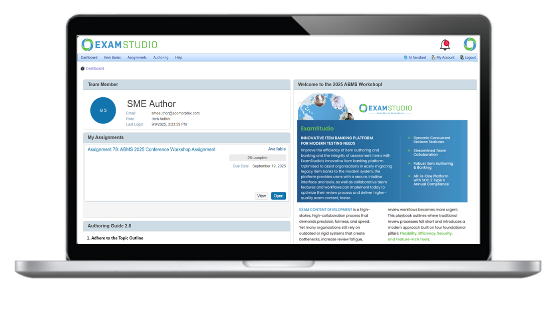
3. Direct Access to Assignment Tasks that can be pinned and accessed throughout ExamStudio
4. Allocation and Tracking Tools for SME and Item Progress Tracking by Administrators
By embedding structure directly into the platform, ExamStudio helps programs streamline collaboration, improve predictability, and focus on delivering high-quality assessments—without adding unnecessary complexity.
Schedule a demo to see how ExamStudio simplifies SME collaboration, strengthens program oversight, and helps your team deliver high-quality assessments with confidence.